Blog/Daily Life
ADHD and money: the impulse buys, the unpaid bills, the shame spiral
The Finnela team
7 min read
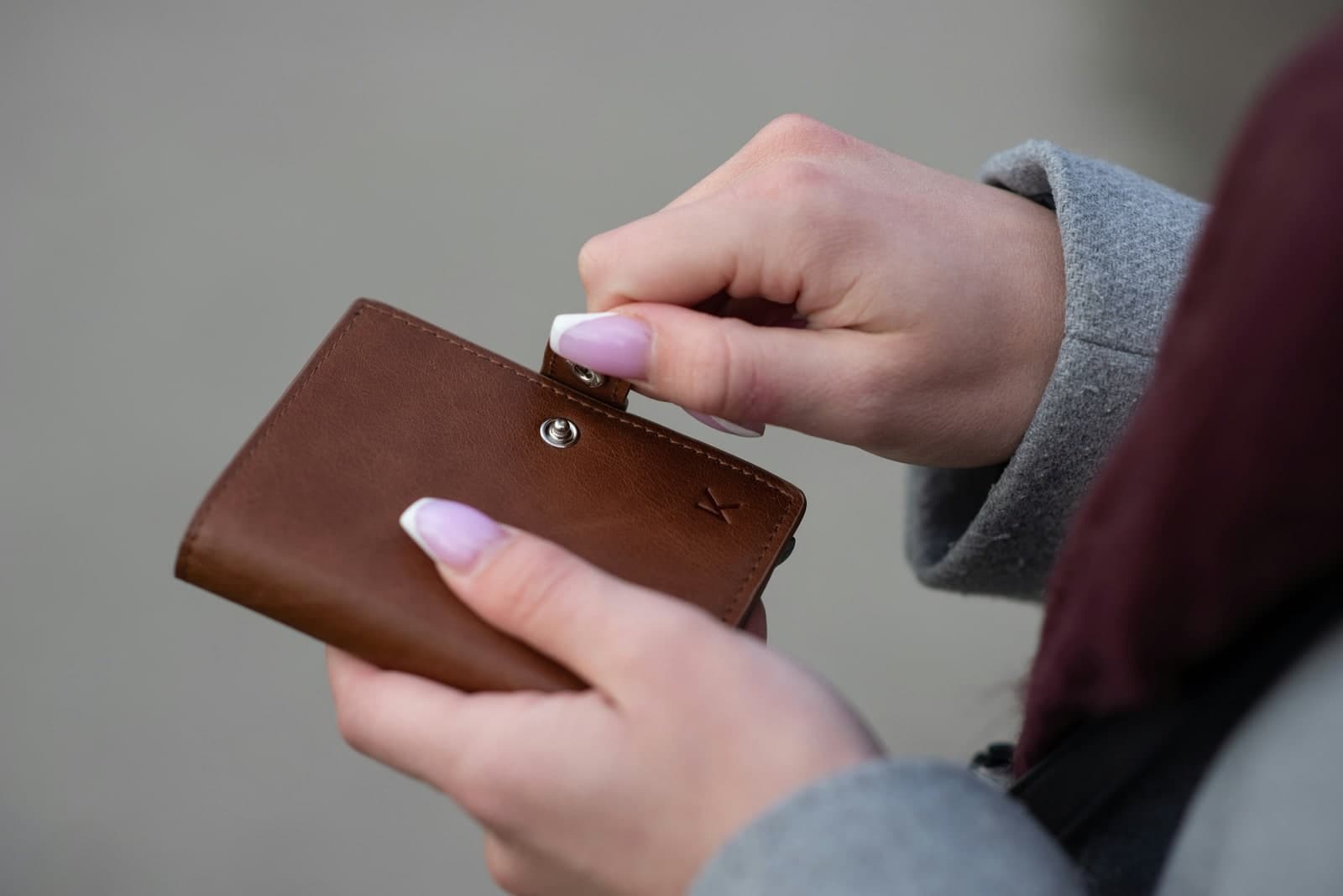
The box has been in the hallway since yesterday, with your name on the label. It's yours, you ordered it, and even so there's an odd half second before you recognize it.
You leave it there. You don't open it.
What you also don't open is the drawer in the hallway cabinet, where there are three window envelopes with the logo showing through. One has been there since before the summer.
Both things are about money. And you're equally bad at both, even though they look like opposites.
First things first, and it needs saying
There's no financial advice here and no system for keeping accounts. This explains a mechanism and names something that almost never gets talked about without judgment.
Recognizing yourself here doesn't mean you have ADHD: that isn't something a piece of writing decides.
It isn't one problem with money. It's two, and they're opposites
From outside it gets told as one single thing, and with one word at that: irresponsible.
From inside they're two different machines.
One is what pulls too hard: what's one click away, now, and gives something back in the same minute.
The other is what doesn't pull at all: the envelope, the form, the phone call, the thing due on the twentieth that gives absolutely nothing back when you do it.
They get the same insult and they have nothing to do with each other.
The machine that pulls: now wins
This has been measured, though not with shopping carts.
In 2021 an analysis was published, by Marx and colleagues, gathering many experiments with the same question behind them: take less today or more in a while. Among people with ADHD, the scales tip a little further toward today. A small distance, and always in the same direction.
The honest part: that gets decided sitting in front of a computer and with pretend money. It isn't anyone's life and it isn't anyone's bank account.
Translated to what's in the hallway: the box gave something back on Tuesday night, on the sofa, in the exact minute it was ordered. The money another thing will need in three weeks wasn't in the room.
It isn't a poor head for numbers. It's that three weeks from now doesn't show up for the fight.
The machine that doesn't pull: the envelope pays nothing
And the other side, which is the one least understood from outside.
Opening the envelope gives nothing. Filling in the form gives nothing. Calling and waiting fourteen minutes gives nothing, beyond it stopping being a weight.
And that's where the theory Tripp and Wickens put on the table in 2008 fits: that starting, in these cases, brings no prize of its own, because the signal that in others moves forward to that moment arrives fainter.
The honest part: it's still a proposal. Nobody has confirmed it and nobody has knocked it down.
And there's something else, and it's what turns an envelope into a piece of furniture: there may be a figure inside. Opening it means finding out. So fear gets added to the usual task, and the drawer closes again.
And what gets bought is almost never the thing
When the day has been too much, or too flat, the body asks for something that arrives fast. Sometimes it's the phone, sometimes it's food, and sometimes it's buying.
What hooks there isn't the object. It's the stretch of choosing it, the shipment going out, the box that's going to arrive. By the time it arrives, often there was nothing inside it any more.
That isn't a failure of character. It's the same machinery from further up, looking for in five minutes what the whole day hasn't given it once.
The honest part: this description comes from what gets seen in the consulting room and from what women say when they're asked. There's no measurement behind it like the one above.
The loop, which is what really does the damage
Short relief. Then the hole. Then the shame.
And shame does one specific and very expensive thing: it closes the drawer. Not looking at the account, not opening the app, not telling anyone. And every week without looking makes looking more expensive.
There's no laziness anywhere in that. There's an account that grows for not being looked at and a person who can't look at it because it hurts more every time.
It's a loop, not a defect. And loops don't get walked out of on willpower, because the willpower is already all spent on getting through the day.
And the shame is almost never only yours
Because money, unlike almost everything else, is carried with someone.
There's a partner who finds out, or parents, or a sister. There's a conversation that repeats, and in that conversation you are always in the same place.
And sometimes what looks like the solution happens and isn't: someone takes the reins. The bills go, the passwords go, the control goes. The practical problem genuinely improves, and at the same time what the voice inside had been saying for years has been signed in writing: that you can't be relied on.
Nobody is to blame there. Whoever does it usually does it meaning well and tired.
It's just worth seeing the price, because from outside almost nobody does: help arranged without you confirms the story. Help arranged with you, however slower and clumsier, doesn't.
What has been asked
In 2023, Attoe and Climie reviewed what's published on adult women with ADHD. Among the things that repeat most in those accounts is one: decades of believing themselves odd, slow or not hardworking, long before anyone stopped to look at anything.
And that same year, Ginapp and colleagues brought together forty-three adults from ADHD communities, almost all of them women, to ask about the emotional side. What they say fits with the above.
The honest part: they're small groups, made up of people who volunteered, and a review that barely found material to gather. None of that lets anyone count how many this happens to. It only shows what comes out when you ask.
And the other part has to be said, which is the important one in this article: on purchases, debts, missed payments or bills in adult women with ADHD, there is no literature behind it like the one above. Whatever gets stated confidently about that on the internet doesn't come from there.
What doesn't get told about this
The late fee paid for not opening an envelope that had a small figure inside it, much smaller than the fee.
The things bought for a version of you that was going to start on Monday: the clothes in one size, the materials for a course, the machine for a whole life.
Having rounded down when saying out loud what something cost.
And one that never gets told at all: having had the money and still not being able to do the piece of admin that moved it from one place to another.
When it's no longer you choosing
There's a line this article doesn't cross, and it's worth naming it clearly.
The loop above is one thing. Quite another is spending, or gambling, or whatever it is, having stopped being in your hands. That isn't about getting better organized any more and it certainly doesn't get solved by reading: there are professionals for it, and there are also groups where people help each other as equals.
There's room here for how you're feeling. It's just that they can help you better there than here.
Straight accounts with what's known
Backed: that in laboratory tests the small and immediate gets more votes than the large and distant.
Still up in the air: that starting something, on its own, brings no reward.
Not even looked at: what the real money of adult women with ADHD looks like, which is exactly the subject of these lines.
And something that needs no research. Someone who doesn't open an envelope out of fear of what it says inside isn't being irresponsible. She's afraid.
This is educational support, a complement to medical care and never a substitute for therapy or treatment. Nobody is diagnosed here.
And if one particular drawer came into your head while you read, the Map doesn't open it, but it puts in order what's behind it. It's free, it takes a few minutes, and it hands your own tangle back to you, in order.
And one more thing, set apart from everything above. If you find yourself thinking you don't want to be here, that doesn't wait for an appointment: tell someone today, a professional or a crisis or emergency service in your country. And if something is getting away from you, with drink, with food, with whatever it is, that's one to take to a professional too. It isn't that there's no room here for how you're feeling: it's that they can help you better there than here. No talking around it, and nothing to be ashamed of.
Where this comes from
- Marx et al. (2021). Journal of Attention Disorders.
- Tripp and Wickens (2008). Journal of Child Psychology and Psychiatry. This is a theory, not a finding.
- Attoe and Climie (2023). Journal of Attention Disorders.
- Ginapp et al. (2023). PLOS ONE. A qualitative study with adults recruited in ADHD communities.
If this sounds like you, your Map puts it in order.